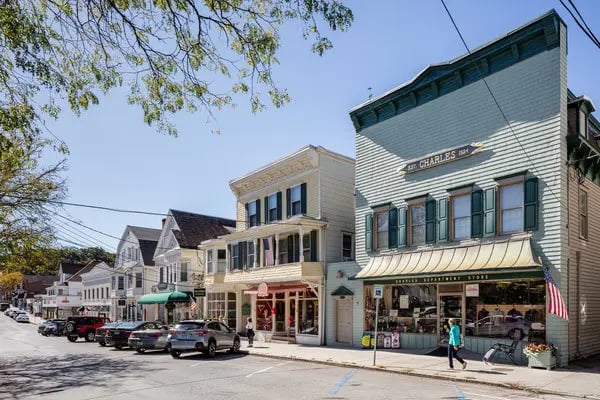
Who this guide is for: people who live in Manhattan and are weighing a move north to Westchester County, NY, whether for more space, a yard, a village main street, or a house that still puts Grand Central within a train ride. The Garay Team at SERHANT. works throughout Westchester, so this guide covers what actually changes: the train, the towns, the homes, and the taxes and paperwork that are different once you leave the city.
How do you commute from Westchester to Manhattan?
Three Metro-North lines run through Westchester County, and all three end at Grand Central Terminal, with a stop at Harlem-125th Street on the way.
- Hudson Line: follows the Hudson River through Yonkers, Hastings-on-Hudson, Dobbs Ferry, Irvington, Tarrytown, Ossining, Croton-Harmon, and Peekskill.
- Harlem Line: runs up the center of the county through Bronxville, Tuckahoe, Scarsdale, Hartsdale, White Plains, Pleasantville, Chappaqua, Mount Kisco, Bedford Hills, Katonah, and Goldens Bridge.
- New Haven Line: follows Long Island Sound through Pelham, New Rochelle, Larchmont, Mamaroneck, Harrison, Rye, and Port Chester before continuing into Connecticut.
Travel time depends far more on the train than on the mileage. Express and local trains from the same station can differ a lot, and some stations get far more express service than others. Before you fall for a house, check MTA TrainTime for the morning and evening trains you would actually take, and look at station parking, since many station lots require a resident or nonresident permit, and some have waitlists.
Metro-North's Penn Station Access project will add a route from the New Haven Line to Penn Station through the East Bronx. The MTA's project page lists 2030 as the current estimated completion date, so plan around Grand Central for now.
By car, the main north-south routes are the Saw Mill River Parkway, the Bronx River Parkway, the Hutchinson River Parkway, the Sprain Brook Parkway, I-87 (the New York State Thruway), I-684, and I-95. Westchester County's Bee-Line bus system covers much of the county, and Westchester County Airport (HPN), near White Plains, offers commercial flights without a trip to LaGuardia or JFK.
Which Westchester towns should Manhattan buyers look at first?
Start with how you want to live day to day: walk to the train and a main street, or more land and a drive to the station. Here is how we describe the places we cover.
- Bronxville: a compact village on the Harlem Line with a walkable downtown and a large share of co-ops and condos alongside single-family homes. Read co-op vs. condo in Bronxville.
- Scarsdale: a Harlem Line village with a train station in the middle of its downtown and mostly single-family streets around it.
- White Plains: the county seat, with Harlem Line service, high-rise condos and rentals downtown, and single-family neighborhoods at the edges. See what the White Plains apartment boom means for condo and co-op buyers.
- Larchmont and Mamaroneck: Long Island Sound villages on the New Haven Line, with harbors, beaches, and busy main streets. Read life on the Sound in Larchmont.
- Rye: a Sound shore city on the New Haven Line with a walkable downtown, beaches, and waterfront homes. See buying a waterfront home in Rye.
- Harrison: a New Haven Line town that also sits close to Westchester County Airport and I-287.
- Chappaqua and Katonah: northern Harlem Line hamlets with village centers near the station and larger lots beyond. Read walkable village living in Katonah.
- Armonk, Bedford, Pound Ridge, North and South Salem, and Waccabuc: northern Westchester towns with acreage, horse country, and lakes, where most people drive to a Harlem Line station. See buying land in Bedford.
What kinds of homes will you find in Westchester?
- Co-ops and condos: common in Bronxville, White Plains, Scarsdale, Larchmont, and other southern Westchester villages near the train. Co-op boards in Westchester review buyers much as Manhattan boards do. Read co-op board approvals in Larchmont.
- Village single-family homes: Tudors, Colonials, and Victorians on smaller lots within walking or short driving distance of a station and main street.
- Waterfront homes: along Long Island Sound in Rye, Mamaroneck, and Larchmont, and along the Hudson in the river villages.
- Estates and acreage: larger properties in Bedford, Pound Ridge, North Salem, and Armonk. Read renovate or build new in Bedford.
To see what is on the market right now, search Westchester County homes for sale.
What changes about taxes and paperwork when you leave Manhattan?
- City income tax: New York City's personal income tax applies to New York City residents. Once you are no longer a city resident, it no longer applies to you. New York State income tax still does.
- Yonkers is the exception: Yonkers residents pay a city resident income tax surcharge. For tax year 2025, New York State's Form IT-201 instructions set it at 16.75 percent of net New York State tax. No other Westchester municipality has a resident income tax.
- Property taxes: in Westchester, property taxes are set by the town or city, the village where there is one, the county, and the school district, and they vary widely from one address to the next. Ask for the actual tax bill on any home you are considering.
- Transfer taxes: New York City's Real Property Transfer Tax and the city-only additional mansion tax rates do not apply to a Westchester purchase. New York State's transfer tax still applies, and so does the state's 1 percent mansion tax on residential purchases of $1 million or more.
- Village or town: the same mailing address can sit in a village or the surrounding town, with different services and rules. Confirm which one a house is in before you buy.
- Talk to your accountant and attorney about your own situation. This guide is general information, not tax advice.
Selling in Manhattan and buying in Westchester
Many moves north involve selling or leaving a Manhattan apartment and buying a house, so timing matters. We can plan your Westchester purchase around your Manhattan sale or lease, and we can refer you to a trusted SERHANT. colleague in the city for the Manhattan side. Start with our Westchester County town guides. If you want more land or a second home farther north, see Putnam County, Dutchess County, and our guide to moving from Westchester to Dutchess County. If you are also looking across the Connecticut line, see Fairfield County.
FAQs
Which Metro-North lines serve Westchester County?
The Hudson, Harlem, and New Haven Lines. All three run to Grand Central Terminal and stop at Harlem-125th Street.
Will Metro-North run from Westchester to Penn Station?
The MTA's Penn Station Access project will connect the New Haven Line to Penn Station. The MTA currently estimates completion in 2030.
Do you pay New York City income tax if you live in Westchester?
Not as a resident. New York City's personal income tax applies to city residents. Yonkers has its own resident income tax surcharge, and New York State income tax applies everywhere in the state.
Are there co-ops in Westchester?
Yes. Co-ops are common in southern Westchester villages near the train, such as Bronxville, Scarsdale, White Plains, and Larchmont, and they go through board approval much like Manhattan co-ops.
Does The Garay Team work in Westchester?
Yes. The Garay Team at SERHANT. works throughout Westchester County and the Hudson Valley. We are licensed in New York and Connecticut only. Call us at 914-772-2603.
Sources
- MTA: Metro-North line maps and Penn Station Access project page (2030 estimated completion).
- New York State Department of Taxation and Finance: New York City, Yonkers, and MCTMT, Form IT-201 instructions, tax year 2025 (Yonkers surcharge), and real estate transfer tax.
- Westchester County: Bee-Line bus and Westchester County Airport.