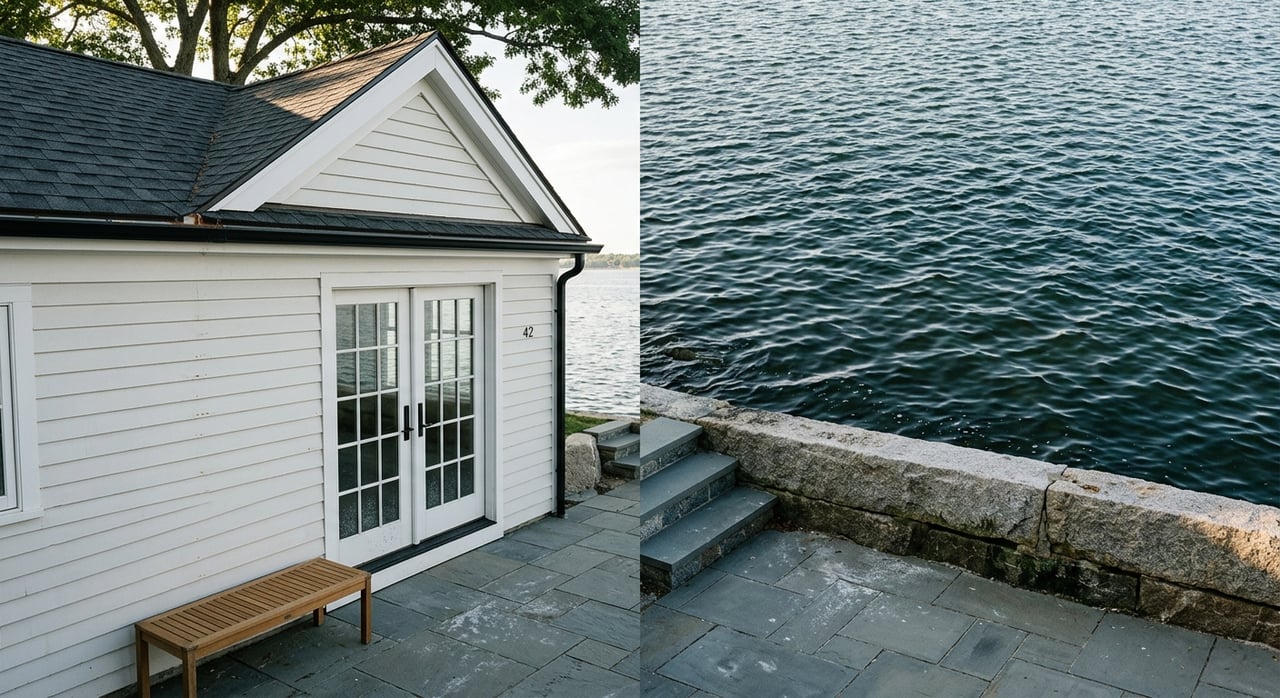
Buying a waterfront home in Rye requires looking past the view to the flood zone map, the insurance requirements, and the shoreline structures that come with the property, because Rye's roughly 14 miles of Long Island Sound coastline puts a meaningful share of its housing stock inside FEMA-designated flood zones. A beautiful water view and a manageable flood risk aren't the same thing, and buyers who confirm the difference before making an offer avoid an expensive surprise after closing.
Key Takeaways
- FEMA defines high-risk flood zones as having at least a 1% annual chance of flooding, which works out to roughly a one-in-four chance over a standard 30-year mortgage.
- Standard homeowners insurance excludes flood damage; separate flood coverage through the NFIP or a private insurer is almost always necessary on true waterfront property.
- About a quarter of flood losses nationally happen outside officially designated high-risk zones, so a favorable flood map isn't a guarantee.
- Rye's Municipal Boat Basin and public beach access vary property to property, so "waterfront" doesn't automatically mean private water access.
What Does "Waterfront" Actually Mean in Rye?
Not every property marketed as waterfront in Rye comes with the same access. Some homes have direct private frontage on the Sound or a tidal inlet; others sit near the water but rely on deeded rights-of-way, shared docks, or simple proximity without any real water access at all. Buyers should ask specifically what rights, if any, come with the property before assuming a waterfront listing means private beach or dock access.
Beach and Marina Access Worth Verifying
Rye's George W. DePauw Municipal Boat Basin operates roughly 350 boat slips and 144 kayak slips, along with launch and storage services, which is a valuable amenity for buyers who boat but doesn't mean every waterfront property has direct access to it. Public beach access in Rye is also managed separately from private waterfront ownership, so a buyer who wants beach access as part of daily life should confirm exactly how a specific property connects to it, rather than assuming proximity equals access.
Local Tip: A property a few blocks from the water with confirmed beach or marina rights can sometimes offer more real access than a home directly on a private inlet with no path to open water. Access rights matter more than raw proximity.
How to Read the FEMA Flood Map Correctly
FEMA's flood maps designate high-risk zones as carrying at least a 1% annual chance of flooding, and that single-year number compounds meaningfully over a mortgage term: across 30 years, a high-risk property carries roughly a one-in-four chance of experiencing a flood event. Buyers should pull the specific flood zone designation for any waterfront property under consideration directly from FEMA's mapping tools rather than relying on a listing description alone.
Flood Insurance Requirements and Timing
Most homeowners policies exclude flood damage entirely, which surprises buyers who assume their standard policy covers everything. Waterfront buyers typically need a separate flood policy, either through the National Flood Insurance Program or a private insurer, and lenders financing a home in a designated flood zone will generally require proof of that coverage before closing. NFIP policies carry a standard 30-day waiting period before coverage takes effect, which means buyers should secure a policy well ahead of closing, not at the last minute.
Coverage Source | Typical Structure Limit | Notes |
|---|---|---|
NFIP (federal) | $250,000 | $100,000 contents limit; ~30-day waiting period |
Private flood insurance | Often higher, customizable | May cover more personal property; check exclusions |
Both options tend to run in the range of several hundred to just over a thousand dollars annually depending on the specific risk profile, though every property's premium is calculated individually.
Elevation Certificates and Documentation
An elevation certificate, which documents how high a structure sits relative to the base flood elevation, can materially affect both insurance cost and eligibility. Buyers should ask sellers whether an elevation certificate already exists for the property; if not, obtaining one before closing can clarify actual flood insurance costs rather than leaving that number as a post-closing surprise.
Specialized Inspection Considerations
Waterfront homes deserve inspection attention beyond the standard checklist:
- Foundation and crawlspace condition, given proximity to tidal water
- Evidence of past water intrusion, even if cosmetically repaired
- Drainage and grading around the structure
- Age and condition of any mechanical systems located below grade
Shoreline Structures: Docks, Bulkheads, and Seawalls
Any dock, bulkhead, or seawall on the property comes with its own maintenance responsibilities and, often, its own permitting history through the City of Rye's Marine Division. Buyers should ask for permits and maintenance records on these structures the same way they would ask about a roof or a furnace, since repair costs on shoreline structures can run high.
Main Takeaway: The flood map, the insurance quote, and the shoreline structure history together tell a waterfront buyer more about long-term cost than the view ever will.
Long-Term Maintenance Budgeting
Salt air, tidal exposure, and shoreline structures all add to a waterfront home's maintenance budget compared to an inland property of similar size. Buyers should factor in higher expected costs for exterior materials, mechanical systems, and any dock or seawall upkeep when comparing a waterfront listing's price against an inland alternative.
Questions Worth Asking Before Making an Offer
- What is the property's specific FEMA flood zone designation, and does an elevation certificate exist?
- What did the most recent flood insurance premium actually cost the current owner?
- What water access rights, if any, transfer with the property?
- What is the age and permit status of any dock, bulkhead, or seawall?
Ready to look at waterfront listings in Rye or elsewhere in Westchester County? The Garay Team can pull flood zone data and access details on specific properties before a buyer schedules a tour.
