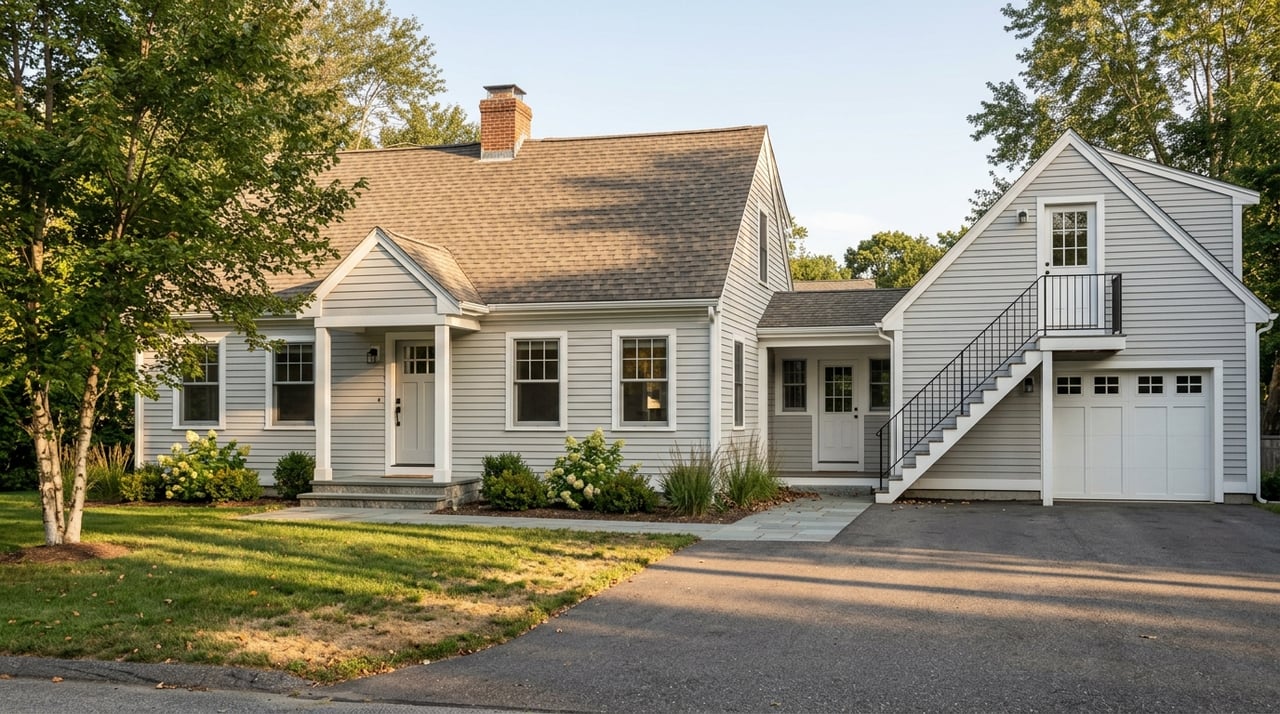
House hacking in New Paltz means buying a property, living in part of it, and renting out the rest, usually to students or young professionals drawn to SUNY New Paltz's roughly 6,200 undergraduates, and it works differently here depending on whether the property sits in the Village or the Town. Unlike a pure short-term rental play, house hacking is built around an owner actually living on-site, which changes both the zoning path available and the day-to-day realities of managing tenants.
Key Takeaways
- SUNY New Paltz's enrollment creates steady rental demand for both traditional multi-unit properties and accessory dwelling units.
- Town ADUs need a minimum of 350 square feet and must be rented for stays of 30 days or longer.
- Village ADUs are capped between 300 square feet and 35% of the principal residence's size, on a lot of at least 7,260 square feet.
- Town registration currently runs $400 for initial registration and inspection, $200 for renewal, and $100 for a certificate of occupancy.
Why House Hacking Fits New Paltz Specifically
A college town with a large undergraduate population and a persistently tight rental market gives owner-occupants a real advantage: steady tenant demand within walking or short-driving distance of campus, paired with local rules that specifically favor owner-occupied rental arrangements over pure investment ownership. That combination is less common in towns without a major college anchoring demand, and it's a big part of why house hacking works particularly well here.
Why Parcel Location Matters Before Anything Else
Just as with short-term rentals, whether a property sits inside the Village or the surrounding Town changes the available strategy substantially. Buyers should confirm jurisdiction first, since Village and Town rules differ on lot size minimums, accessory dwelling unit size limits, and registration requirements.
Comparing Property Types for House Hacking
Property Type | How It Works | Best Fit |
|---|---|---|
Multi-family (2–4 units) | Owner occupies one unit, rents others | Buyers wanting separate, code-compliant units |
Single-family with ADU | Owner adds or uses an existing accessory unit | Buyers wanting one primary structure |
Single-family with room rentals | Owner rents individual rooms to students | Buyers comfortable with shared common space |
Town ADU Rules
The Town of New Paltz requires accessory dwelling units to be at least 350 square feet, and any rental of that unit must run 30 continuous days or longer, which rules out using a Town ADU as a nightly short-term rental. That 30-day minimum aligns naturally with a semester-long or year-long student lease, which is exactly the kind of tenant this market tends to attract.
Village ADU Rules
The Village takes a different, size-relative approach: an accessory dwelling unit must fall between 300 square feet and 35% of the principal residence's square footage, and the lot itself needs to be at least 7,260 square feet to qualify. Buyers should measure the existing house carefully before assuming a given ADU size will be approved, since the 35% ceiling can be more restrictive than it sounds on a smaller principal residence.
Local Tip: Before making an offer on a property specifically for its ADU potential, pull the actual square footage of the main house and run the 35% Village calculation, or confirm the Town's flat 350-square-foot minimum applies. A listing description alone won't confirm whether a planned ADU is actually permittable.
Registration and Ongoing Costs
Town rental registration currently runs a $400 fee covering initial registration and inspection, a $200 annual renewal, and a separate $100 fee for a certificate of occupancy where applicable. Owners renting to non-relatives in either jurisdiction should also confirm current fire safety and occupancy inspection requirements, since student rentals often draw closer code scrutiny than owner-only households.
The 15-Mile Local Contact Rule
Owners who don't live within 15 miles of the property, whether in the Village or the Town, generally need to designate a local contact person who can respond to issues promptly. For a true house-hacking owner living on-site, this requirement doesn't apply, which is one more practical advantage of the live-in approach over absentee ownership.
Budgeting for a House Hack
Buyers should model the numbers conservatively: realistic vacancy between semesters and during summer months, maintenance costs tied to higher tenant turnover than a standard rental, and the registration and inspection fees above. A mortgage calculator and affordability calculator help translate a target purchase price into an actual monthly obligation before rental income is factored in, which is the more conservative way to underwrite the purchase.
An Actionable Checklist
- Confirm Village versus Town jurisdiction for the specific parcel
- Measure the principal residence and calculate ADU size eligibility under the applicable rule
- Confirm current registration, inspection, and certificate of occupancy requirements
- Model rental income around the academic calendar, not a flat monthly assumption
- Compare financing options for owner-occupied multi-unit purchases, which often carry more favorable terms than pure investment loans
Main Takeaway: House hacking in New Paltz works because owner occupancy unlocks rules and financing options that a pure investment purchase doesn't get access to. Buyers who structure the purchase around actually living there, at least initially, have more flexibility than those trying to work around the residency requirements.
House Hacking or Short-Term Rental?
Buyers still deciding between strategies should compare this approach against a pure nightly-rental model. New Paltz's short-term rental rules, costs, and return expectations lay out the jurisdiction-specific requirements for that alternative side by side with what's covered here.
Thinking about a house-hacking purchase in New Paltz? The Garay Team works with owner-occupant investors across Ulster County and can help identify properties that actually fit the ADU and multi-unit rules before an offer goes in.
Disclaimer: This article is for general informational purposes only and is not legal, tax, or financial advice. ADU size limits, registration fees, and occupancy requirements in the Village and Town of New Paltz are set by local ordinance and change over time, so buyers should confirm current requirements directly with the Village and Town Building Departments and consult a real estate attorney or accountant before purchasing a property with a house-hacking strategy in mind.
