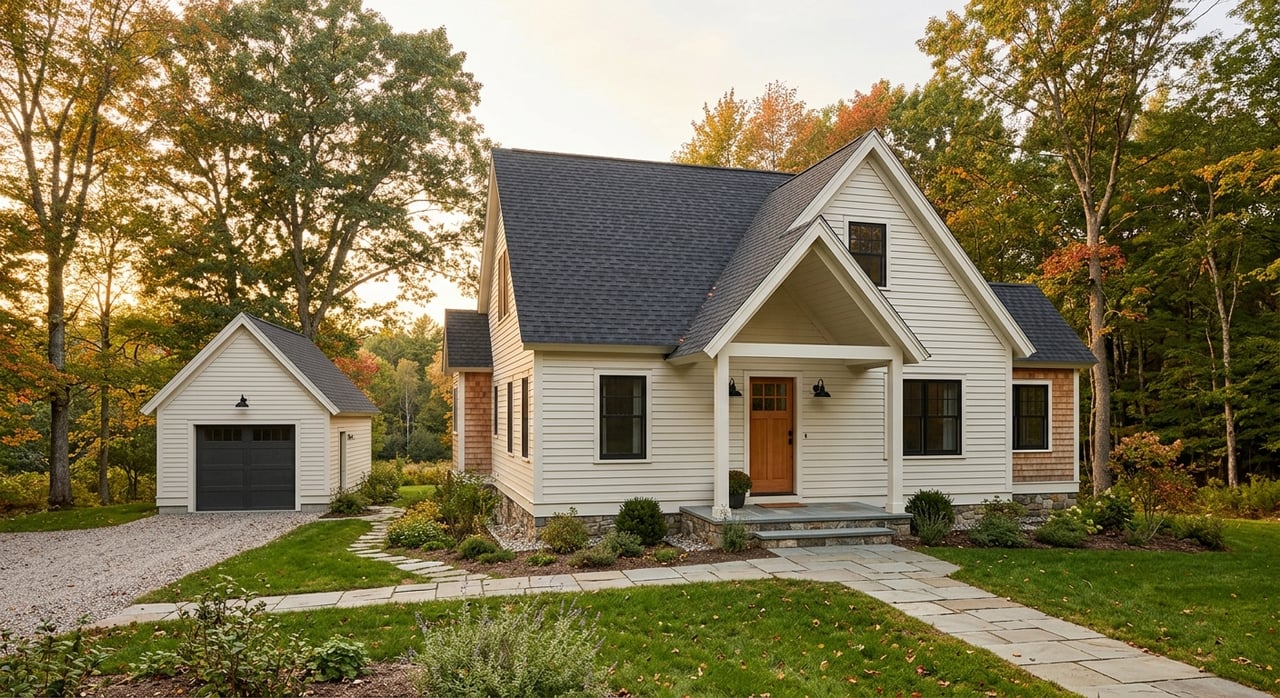
Dreaming about a place where your weekends slow down the moment you arrive? Woodstock has long attracted buyers looking for exactly that kind of escape, with a mix of natural beauty, arts, and a small-town feel that has drawn New York City visitors for generations. If you are thinking about buying a weekend home here, it helps to understand how this market works before you make an offer. Let’s dive in.
Why Woodstock appeals to weekend buyers
Woodstock stands out as a retreat market, not a high-turnover suburb. Census QuickFacts shows an owner-occupied housing rate of 83.7%, which points to a community with a strong base of full-time owners rather than a market dominated by constant turnover.
That matters when you start shopping for a second home. In places like Woodstock, buyers are often competing for lifestyle, setting, and long-term value just as much as square footage. You are not only buying a house here. You are buying access to a certain pace and environment.
The town itself also has a long history as a getaway destination. Official town materials highlight Woodstock’s arts, community, and natural setting, and its history notes that visitors from New York City were drawn here as a summer escape. That legacy still shapes buyer demand today.
What weekend homes cost in Woodstock
If you are trying to pin Woodstock down to one number, you will probably get mixed signals. That is normal in a small market where data can vary depending on whether the source is measuring the town, the ZIP code, or a different local area.
Recent snapshots show that Woodstock pricing sits in a premium range. Redfin reported a median sale price of $735,000 in March 2026, while Realtor.com reported a median home sale price of $799,000 in January 2026 and $889,000 for ZIP code 12498.
The smartest way to read that data is as a range, not a headline number. If you are buying a weekend home in Woodstock, your actual price point will depend heavily on location, acreage, condition, privacy, and site characteristics.
There may still be room to negotiate, even at higher price points. Realtor.com’s February 2026 snapshot said homes sold 2.18% below asking on average, which suggests buyers may have some leverage depending on the property and timing.
Why property type matters here
In Woodstock, the land can be just as important as the house. Town zoning reflects a mix of hamlet homes, low-density rural properties, and environmentally sensitive hillside parcels rather than one uniform housing stock.
That creates a very different search process than you might expect in a more standardized market. Some properties are in areas shaped by drainage, topography, and rural land-use patterns, while others may fall within scenic, floodway, flood-fringe, or gateway overlay areas.
For you as a buyer, that means two homes with similar square footage can present very different ownership experiences. A charming house on a steep site or in a flood-related overlay may require a different level of planning, maintenance, or insurance than a more straightforward parcel.
How to shop with a weekend-home mindset
A weekend home search should start with your real-life use case. Before you fall in love with photos, think through how often you will come up, what season you will use it most, and how much maintenance you want to handle when you are not there.
Ask practical questions early:
- Do you want a house close to a hamlet setting or more privacy on rural land?
- Are you comfortable with steep driveways, drainage issues, or hillside conditions?
- Will you want easy year-round access?
- Are you looking for a move-in-ready home or a property you can improve over time?
- Do you plan to use the home only for yourself, or do you hope to offset costs with rentals?
These answers shape far more than your wish list. They influence where you should look, what kind of property is realistic, and how conservative you should be when evaluating condition and carrying costs.
Protect yourself with strong due diligence
For a Woodstock weekend home, due diligence is not the place to cut corners. New York State defines a home inspection as a written report on the observable condition of a home’s systems and components, including structural, electrical, plumbing, heating, and cooling elements.
The safest approach is to hire an independent, licensed New York home inspector and make sure there is enough time in the contract for inspection. State guidance also warns buyers not to rely on inspectors referred by parties who may not share the buyer’s interests.
This matters even more in Woodstock because site conditions can be a major part of the risk. With floodway and flood-fringe areas in town, plus rules tied to steep hillsides and scenic ridgelines, you want clear information before you narrow or waive contingencies.
When you inspect a property, pay close attention to:
- Roof condition
- Drainage patterns
- Water intrusion history
- Site access in different weather conditions
- Utility setup
- Water quality questions
- Signs of past repairs related to flooding or moisture
A beautiful setting can come with extra complexity. The goal is not to avoid every property with nuance. It is to understand what you are buying before you commit.
Why contingencies matter in Woodstock
In a lifestyle market, buyers can feel pressure to move fast. But speed should not come at the cost of clarity, especially when the property may have slope, drainage, or flood-related considerations.
A practical approach is to preserve inspection and financing contingencies whenever possible. That gives you time to confirm the property’s condition, financing fit, and any major costs that could affect your budget after closing.
If a home is in an area with flood exposure, insurance may also be a larger piece of the ownership picture. Mortgages in a Special Flood Hazard Area generally require flood insurance, so this is something to understand early rather than after contract.
Budgeting beyond the purchase price
Weekend-home buyers often focus first on down payment and mortgage numbers. But in Woodstock, the true cost of ownership also includes how the house sits on the land and what that means for upkeep.
Census QuickFacts reports median monthly owner costs of $2,933 with a mortgage and $1,162 without a mortgage. Those figures offer broad local context, but your actual monthly cost can vary depending on insurance needs, utilities, site maintenance, and the condition of the property.
That is why it helps to underwrite your purchase with a cushion. If the home has a long driveway, older systems, drainage challenges, or seasonal wear, your weekend retreat may cost more to run than a similarly priced home in a simpler setting.
Should you count on rental income?
If rental income is part of your plan, treat it as a bonus, not the foundation of the deal. A Woodstock weekend home should make sense to you first as a second-home purchase.
That is especially important because Woodstock has clear short-term rental rules. Property owners who want to operate a short-term rental must obtain a town registration, post the registration number on online listings, and renew the registration annually.
The town also limits a registrant to one property interest. It distinguishes between owner-occupied and non-owner-occupied short-term rentals, and non-owner-occupied rentals must have a designated local host.
There are also use limits for non-owner-occupied rentals. They may be rented for no more than 180 days per calendar year, with no more than 26 weekends included in that total.
On top of town rules, Ulster County requires short-term rental operators to collect a 4% occupancy tax, register for a Certificate of Authority within three days of starting business, and file quarterly returns even if a booking platform collects the tax. In other words, rental income here is not passive by default. It is compliance-heavy and should be modeled conservatively.
A practical Woodstock buying checklist
Before you buy a weekend home in Woodstock, make sure you can clearly answer these questions:
- What is my true all-in monthly budget?
- Does this property work for my personal use even without rental income?
- What do zoning, overlays, and site conditions suggest about future maintenance?
- Have I reviewed flood, drainage, and access concerns closely?
- Am I using an independent licensed inspector?
- Are my inspection and financing contingencies still strong enough?
- If I want to rent the home, am I eligible under town rules?
- Do I understand local-host, registration, operating-permit, and occupancy-tax requirements?
If you can answer those questions confidently, you are already making smarter decisions than many second-home buyers.
The bottom line on buying in Woodstock
Buying a weekend home in Woodstock can be incredibly rewarding, but it works best when you approach it with both heart and discipline. This is a premium small-market environment where setting, land, and regulation can matter just as much as the house itself.
If you stay focused on the full picture, including price range, site conditions, contingencies, and realistic rental assumptions, you can buy with much more confidence. That is exactly the kind of informed approach that helps a weekend home feel restorative instead of stressful.
If you are exploring Woodstock or other Hudson Valley second-home options, The Garay Team can help you evaluate the market with a practical, local-first strategy.
FAQs
What is the typical price range for a weekend home in Woodstock, NY?
- Recent market snapshots place Woodstock in a premium range, with reported median sale prices from about $735,000 to $889,000 depending on the source and geography measured.
What should buyers inspect before buying a Woodstock weekend home?
- Buyers should use an independent licensed New York inspector and closely review structural systems, roof condition, drainage, water intrusion history, utilities, access, and any flood-related concerns.
Can you use a Woodstock second home as a short-term rental?
- Yes, but only if you meet town requirements, which include registration, annual renewal, and compliance with rules that differ for owner-occupied and non-owner-occupied rentals.
What are the short-term rental limits for non-owner-occupied homes in Woodstock?
- Non-owner-occupied short-term rentals may be rented for up to 180 days per calendar year, with no more than 26 weekends included in that total, and they must have a designated local host.
Does Ulster County charge tax on Woodstock short-term rentals?
- Yes, Ulster County requires short-term rental operators to collect a 4% occupancy tax and file quarterly returns.
Why do Woodstock home prices vary by source?
- Pricing can differ because some reports track the town, some track ZIP code 12498, and others use different local boundaries, so it is more accurate to think in terms of a range rather than one fixed number.
