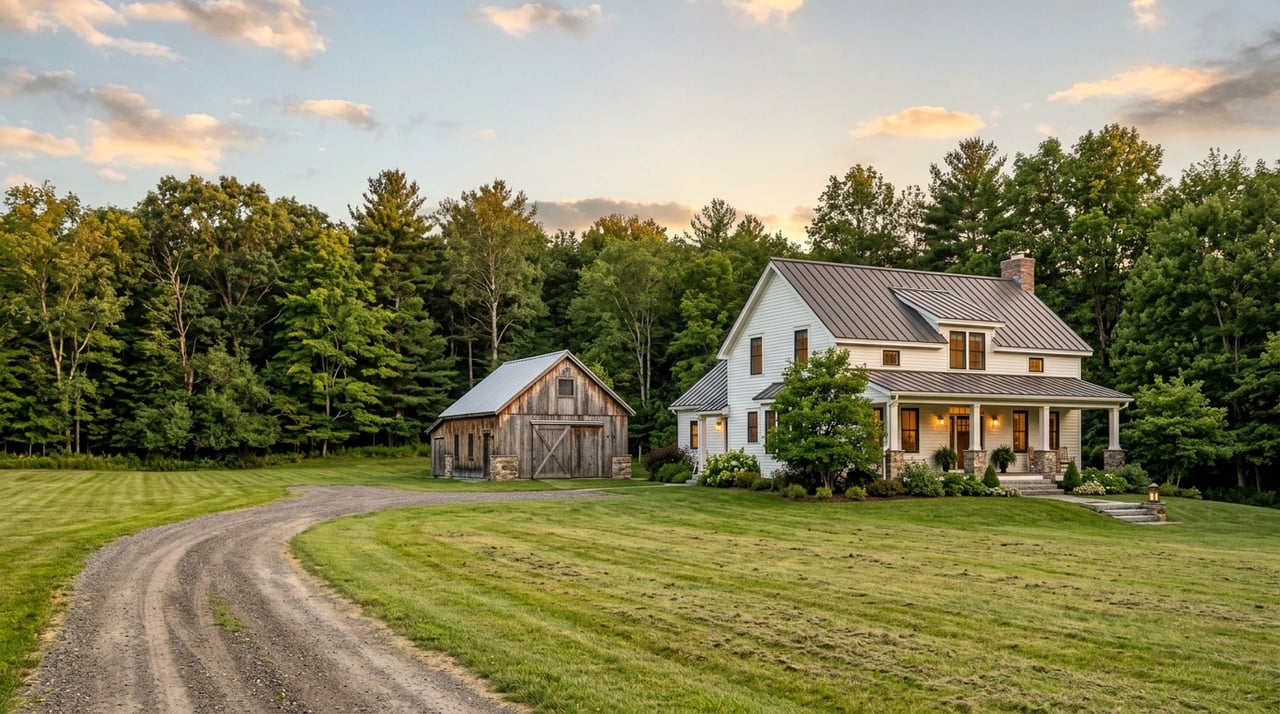
Dreaming about a few quiet acres near Rhinebeck? It is easy to fall for a parcel with woods, views, or open fields, but acreage buying here is not just about how land looks on a tour. If you want a hobby farm, a weekend retreat, or a future build site, you need to know what the land can actually support. This guide walks you through the local rules, property types, and due diligence steps that matter most so you can search with more confidence. Let’s dive in.
Why Rhinebeck Acreage Draws Buyers
Rhinebeck offers a mix of rural character, scenic roads, farmland, and wooded settings that appeal to both full-time and second-home buyers. In practice, most acreage searches focus on the Town of Rhinebeck rather than the compact Village core.
That distinction matters. The Village has a historic district overlay and added sensitivity around development, while the Town code is built to preserve rural character, farms, water resources, open space, and scenic areas. In northern Dutchess County, that rural context is a big part of the appeal, but it also shapes what you can do with a property.
Start With Intended Use
Before you compare acreage totals, get clear on how you want to use the land. In Rhinebeck, the same 10-acre parcel can feel very different depending on whether you want horses, a private retreat, a year-round home, or future development potential.
Your intended use should guide your search from day one. It affects which zoning details matter most, how you evaluate usable land, and what specialists you may need before closing.
Hobby farm or mini-farm goals
If you want a small farm setup, Rhinebeck is generally supportive of agriculture. Town code permits farm operations in most districts, and farm animals are allowed on non-farm parcels of at least 3 acres, subject to specific animal-count limits.
That said, not every open-looking parcel works well for this use. You will want to look closely at usable acreage, access for equipment, room for barns or livestock areas, and required setbacks for manure storage and agricultural buffers.
Weekend retreat priorities
If your goal is privacy and a peaceful escape, wooded parcels may rise to the top of your list. These properties can be beautiful, but tree cover alone does not tell you what is buildable.
In Rhinebeck, scenic-road buffers, wetland edges, stream corridors, and water-resource protections can limit where you place a house, driveway, or utilities. In some cases, the same natural features that make a property feel special are also the features that require extra review.
Primary residence needs
For a full-time home, practical questions move to the front. You need to know whether the parcel can support the house size you want after accounting for setbacks, wetlands, septic needs, and access.
That is why buildable envelope matters more than raw acreage. A parcel may sound generous on paper, but the portion you can actually improve may be much smaller.
Development or investment potential
If you are thinking about subdivision or multiple homes, Rhinebeck’s rules deserve close attention early. Conservation subdivision is a permitted use in all zoning districts and is the town’s preferred method for protecting scenic, historic, natural, and rural resources.
Conventional subdivision in most districts requires a special use permit. Buyers considering development should focus on zoning district, infrastructure feasibility, and whether open-space protection and conservation easements would shape the project.
Know the Property Types You Will See
Acreage near Rhinebeck tends to fall into a few common categories. Each comes with a different risk and opportunity profile.
Wooded retreat parcels
These often attract weekend buyers looking for privacy, trails, or a tucked-away homesite. The key issue is whether the parcel sits in the Water Resources Protection Overlay, a flood fringe, a stream corridor, or a wetland buffer.
The town notes that its WR-O map is approximate. Site-specific, on-the-ground analysis can revise boundaries, which is why a map check alone is not always enough.
Mini-farms and hobby-farm parcels
These are especially appealing if you want open land, outbuildings, gardens, or a few animals. In several districts, roadside stands are also allowed as accessory uses.
Still, a farm-friendly parcel should be evaluated for more than acreage. You should also consider soil, drainage, neighboring uses, access, and space for required setbacks and buffers.
Estate or buildable sites
For buyers focused on a custom home, frontage and width matter as much as lot size. In the RA10 district, minimum frontage and width are 400 feet. In RC5 and RL5, they are 160 feet and 240 feet.
Flag lots may be allowed, but Rhinebeck limits them and applies special frontage and width rules. Some existing RC5 lots of record under 10 acres, but at least 6 acres, may be split once into two 3-acre lots if they meet county well and septic requirements.
Zoning Can Change the Whole Deal
In Rhinebeck, zoning is not background information. It is one of the main factors that determines whether a parcel fits your plan.
The town includes acreage-friendly rural districts such as HP20, RA10, RC5, RL5, and RM1. It also uses overlay districts for water resources, flood fringe areas, and scenic or historic protections.
Scenic road and buffer rules
Some buyers love the feel of a scenic road setting, but those roads can come with added siting rules. In designated areas, Rhinebeck requires special setbacks and roadside buffers equal to at least 10 percent of parcel depth.
Native vegetation between the house and the road generally must be retained, with limited clearing allowed for things like dead wood, invasive plants, driveways, and utilities. That can preserve privacy and character, but it may also reduce flexibility.
Water and wetland review
Land near water deserves extra scrutiny. Development within 100 feet of a DEC-classified stream, a freshwater wetland, a federal jurisdictional wetland, or a Town wetland generally needs special use permit review.
Development within 1,000 feet of the Hudson River also triggers review. In the Flood Fringe Overlay district, development is tied to FEMA mapping and the town’s special use permit process.
State wetland oversight
There is also a state review layer to keep in mind. As of January 1, 2025, NYSDEC regulates freshwater wetlands of at least 12.4 acres, plus some smaller wetlands of unusual importance.
If a boundary is unclear, buyers can request a jurisdictional determination. That can be a valuable step when a parcel’s buildability depends on where wetland limits actually fall on the ground.
The Due Diligence Checklist That Matters
A Rhinebeck land purchase is really a site-planning exercise. Before you close, you want as much clarity as possible about what can be built, where it can go, and what approvals may be needed.
Here are the most important early checks:
- Current survey
- Zoning confirmation
- Review of overlay maps and scenic-road rules
- Frontage, width, and setback analysis
- Septic and well feasibility review
- Soil and drainage review
- Wetland, stream, and floodplain evaluation
- Access review for driveways, equipment, or trailers if needed
Septic and well feasibility
This step should happen early, not after you fall in love with the land. Dutchess County DBCH says lot approval requires a New York State licensed professional engineer, and design depends on house size, topography, nearby wells and septic systems, soil, and depth to rock or groundwater.
DBCH also notes that problems found at pre-construction inspection can stop the building permit process until the lot is re-evaluated. For existing wells, NYSDOH advises testing at least once a year for bacteria and every 3 to 5 years for other contaminants.
Soil and drainage review
Soil conditions are central to rural parcels, especially if you are planning a home, barn, paddock, or driveway. The USDA Web Soil Survey is the official source for soil survey information, and the Dutchess County Soil & Water Conservation District provides soil maps, survey guides, site reviews, floodplain and wetland determinations, stormwater guidance, and other technical assistance.
This is one of the easiest places to avoid a costly mistake. A parcel that looks dry and level during a showing may present very different conditions once soils and drainage are reviewed.
Agricultural compatibility
If you are buying land that may support agriculture or boarding-type uses, think beyond the property line. Buffers, odor, noise, manure storage, and neighboring uses can all affect how comfortable the property feels in daily life.
Rhinebeck requires manure storage setbacks of at least 150 feet from lot lines, streams, or other water bodies and at least 200 feet from neighboring residences or potable wells. The town also requires buffers between agricultural and nonagricultural uses.
Why Agricultural Districts Matter
Dutchess County has one agricultural district, District 21, covering more than 195,000 acres. The county’s right-to-farm law applies to properties in state-certified agricultural districts.
That matters for buyers because a disclosure is required when real property is sold within 500 feet of such a district. If you are looking near active farmland, this is not necessarily a drawback, but it is an important part of understanding the setting and expectations around nearby farm activity.
The Smartest Local Experts to Involve
Acreage purchases often require a broader bench of local professionals than a typical home purchase. Bringing the right people in early can help you avoid surprises and make faster decisions.
Depending on the parcel, that may include:
- The Town of Rhinebeck Zoning Administrator for zoning, permits, variances, site-plan compliance, and planning board applications
- Dutchess County DBCH for septic, well approvals, lot approval, and pre-construction inspection
- Dutchess County Soil & Water Conservation District for soil interpretation, mapping, floodplain help, wetland assistance, and site review
- Village of Rhinebeck building, planning, and zoning staff if the property is in the Village or subject to Village historic district considerations
The Bottom Line on Rhinebeck Acreage
When you buy acreage near Rhinebeck, the big question is not just how many acres a parcel has. The real question is how much of that land remains usable and buildable after zoning, septic, wetlands, floodplain, scenic, and agricultural rules are applied.
That is why the best land buyers start with a plan, not just a wishlist. If you are considering a hobby farm, a retreat property, or a future homesite in Rhinebeck, working with advisors who understand the local landscape can help you search smarter and move with confidence.
If you are exploring acreage in Rhinebeck or anywhere in Dutchess County, The Garay Team can help you evaluate land, understand local market context, and find opportunities that fit your goals.
FAQs
What should you check before buying acreage near Rhinebeck?
- You should start with a current survey, zoning confirmation, overlay map review, frontage and setback analysis, and early septic, well, soil, drainage, wetland, and access reviews.
How does zoning affect acreage in Rhinebeck?
- Zoning affects what you can build, where improvements can go, and whether rules on frontage, width, setbacks, scenic buffers, wetlands, or flood fringe areas limit your plans.
Can you keep farm animals on acreage in Rhinebeck?
- Yes, Rhinebeck allows farm animals on non-farm parcels of at least 3 acres, subject to specific animal-count limits in the town code.
Why do wetlands matter when buying land near Rhinebeck?
- Wetlands can reduce the buildable area of a parcel and may trigger special review if development is near a freshwater wetland, stream corridor, flood fringe area, or other protected water resource.
What is the most important question to ask about a Rhinebeck land parcel?
- The most important question is how much of the property is actually buildable and usable for your intended purpose after all local and county requirements are applied.
